
The Watercolor Materials Rabbit Hole — And How I Found My Way Out
Paper, brush, watercolor paint, and water. Simple, right? Well… not exactly. Because within each of those four things lies a rabbit hole deep enough to swallow hours of your life and your entire YouTube watch history.
As a true beginner, I really wanted to have the most perfect materials to start my masterpieces. But there are so many options that I quickly found myself going in circles. I didn’t want to spend too much money… but I also didn’t want to buy cheap and then have to replace everything later. I think this is one of the hardest parts of starting.
This isn’t an expert guide — just my experience, in case it helps you feel a little less alone. Because honestly… it’s not you. There are just too many options.
Paints
So many brands, formats, and quality levels — but don't let that overwhelm you.
Watercolor paints come in pans (dry and compact, great for beginners and travel) or tubes (more concentrated, better for mixing larger amounts). Quality-wise, student-grade paints have more fillers and less pigment, while artist-grade have richer colors and better lightfastness. A small artist-grade set of 6–12 colours will always outperform a large student-grade one — and you can mix almost anything from a limited palette.
My experience
In my case, I started with the Cotman range from Winsor & Newton. At first, it worked fine, but when I followed tutorials, my colors always looked dull compared to what I saw on screen.
Eventually, I understood why — student-grade paints have less pigment, so you need more paint to get strong, vibrant colors. That realization was honestly mind-blowing. I started replacing the colors I used most with the professional version of W&N. The change had a real effect on my paintings — which led me to the next search: what's the best brand I can actually afford?
I eventually ended up with a Schmincke Horadam set, thanks to my very supportive husband who gifted it to me, and I’ve been using it ever since. More recently, I tried a student-grade Van Gogh set during a workshop, and it performed really well with strong, vibrant colors.
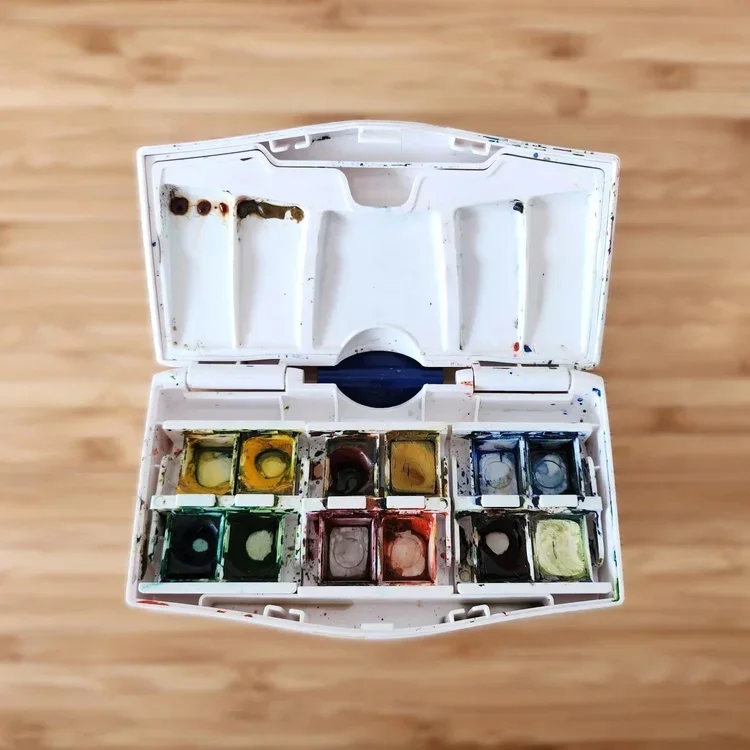
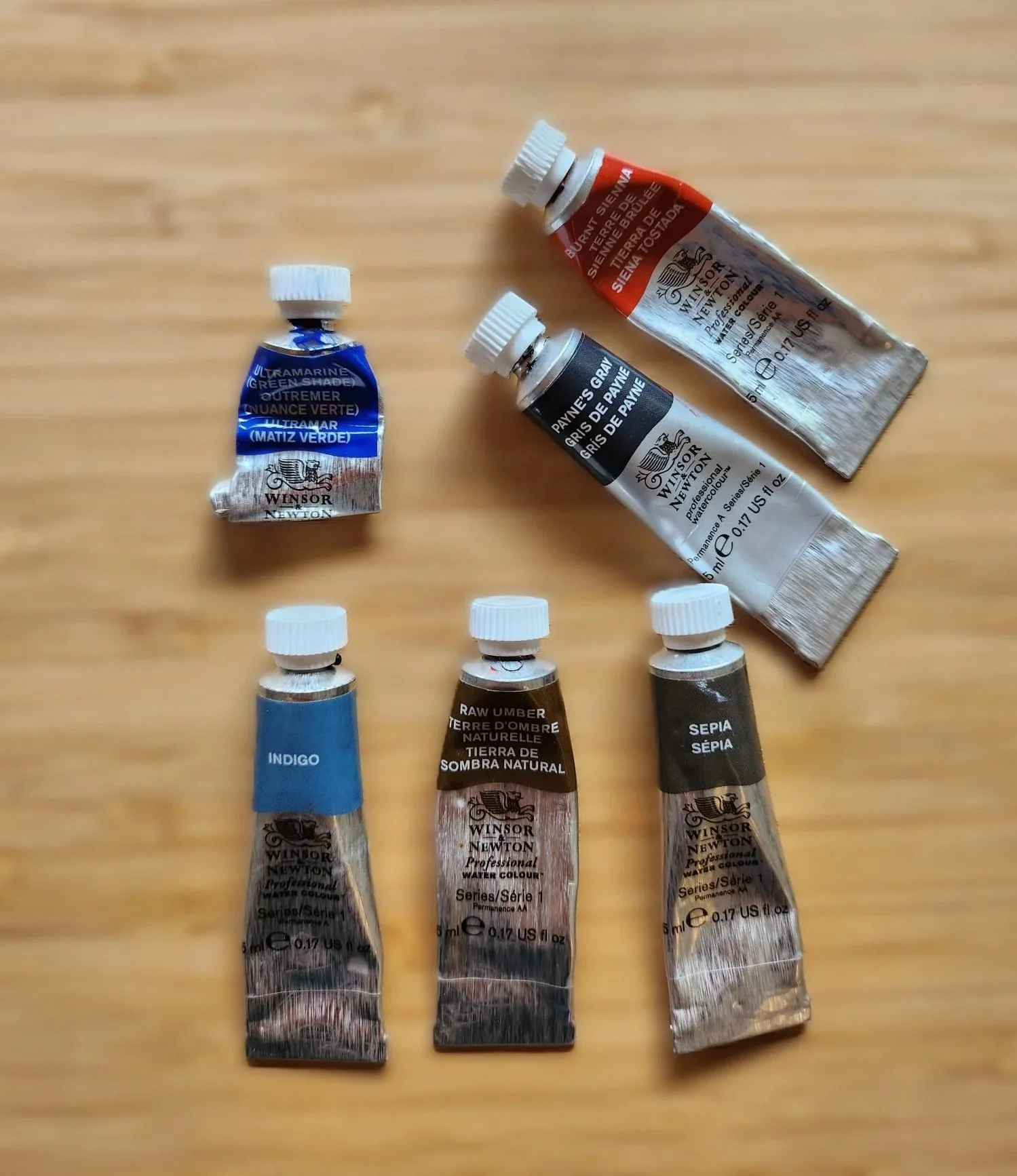
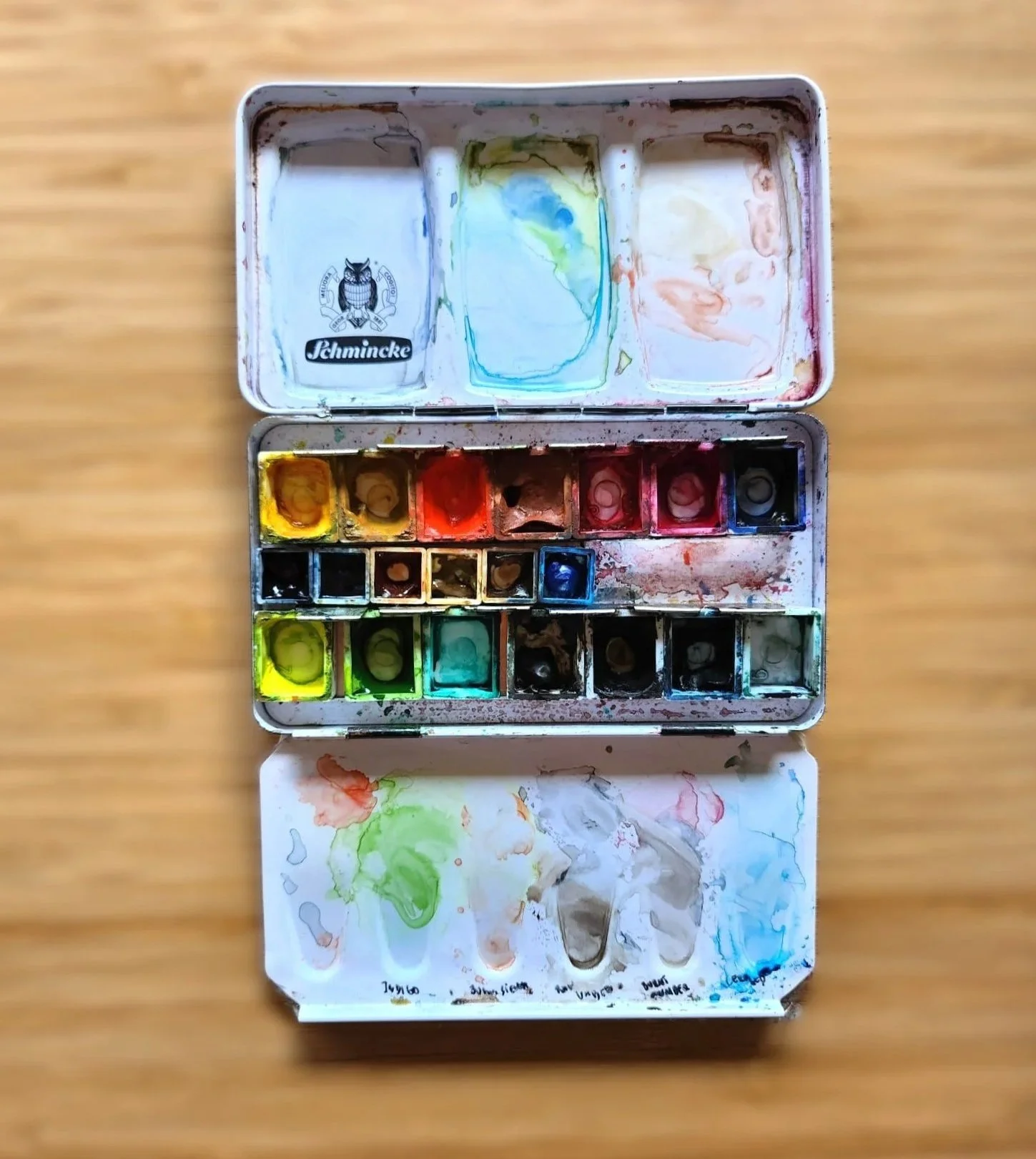
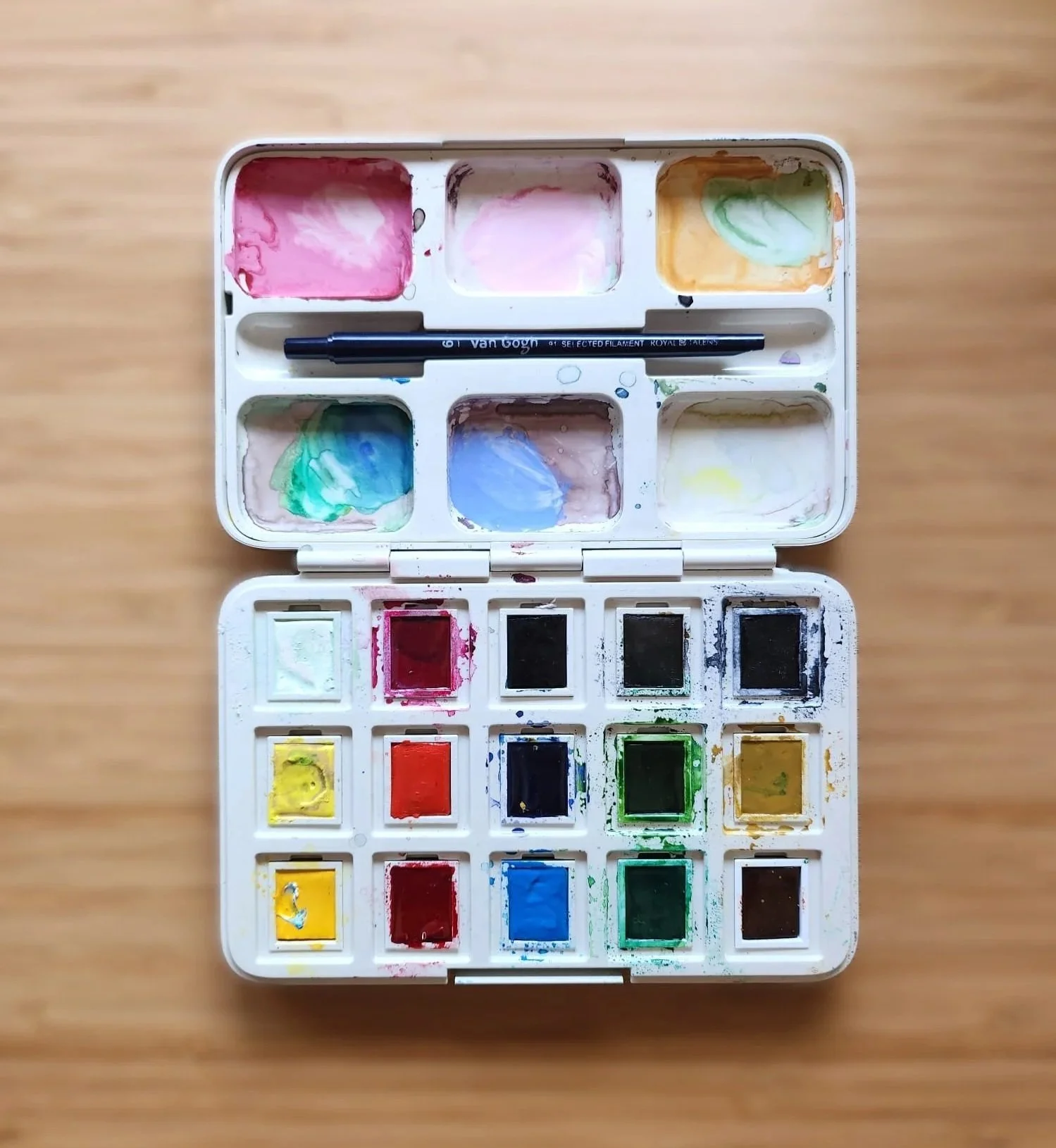
So my takeaway is this: the quality of your materials affects not just your paintings but how you feel about your own progress — so it's worth choosing the best you can reasonably afford. One thing I hear consistently from experienced artists: don't buy large sets. Start with a good-quality 12-colour set and upgrade individual colours as you need them. I followed that advice and it really has worked — I've never felt limited by my palette, and learning to mix is simply part of the watercolor journey. You can mix almost anything from a limited palette — and that's not a limitation, it's actually one of the most valuable skills you can develop.
Brushes
So many shapes, sizes, and materials — but you really don't need much.
Round brushes are the most versatile — they hold water well and allow both fine detail and broad strokes. A size 4 for details, a 6 or 8 for most work, and a 12 for larger washes is all you need to start. Natural brushes like Kolinsky sable hold more water but are expensive. Synthetic brushes are more affordable and perfectly suited for beginners.
My experience
From the beginning, I knew as a personal choice that I didn’t want to use natural hair brushes. I started with a Kolibri Nº8, which is a good brush, but I found it a bit too soft for detail work.
So I went on another “research journey” (many hours of YouTube 😅) looking for good brushes — not the most expensive ones, but good enough that I wouldn't feel the need to replace them. Since I’m in Portugal, not all brands are easy to find or affordable. After many hours of watching, I was “influenced” by a few artists using Escoda brushes. Escoda is a Spanish brand, so it was easy to get them, and I thought: if they’re good enough for them, they’re good enough for me.
I ended up with the Escoda Versátil round brushes in sizes 2, 6 and 12, and a flat brush in size 3/4''. I don’t have much to compare them to, but I love them. They hold water and paint well, their tips are great for detail, and they haven’t failed me yet. They are still the only brushes I have.
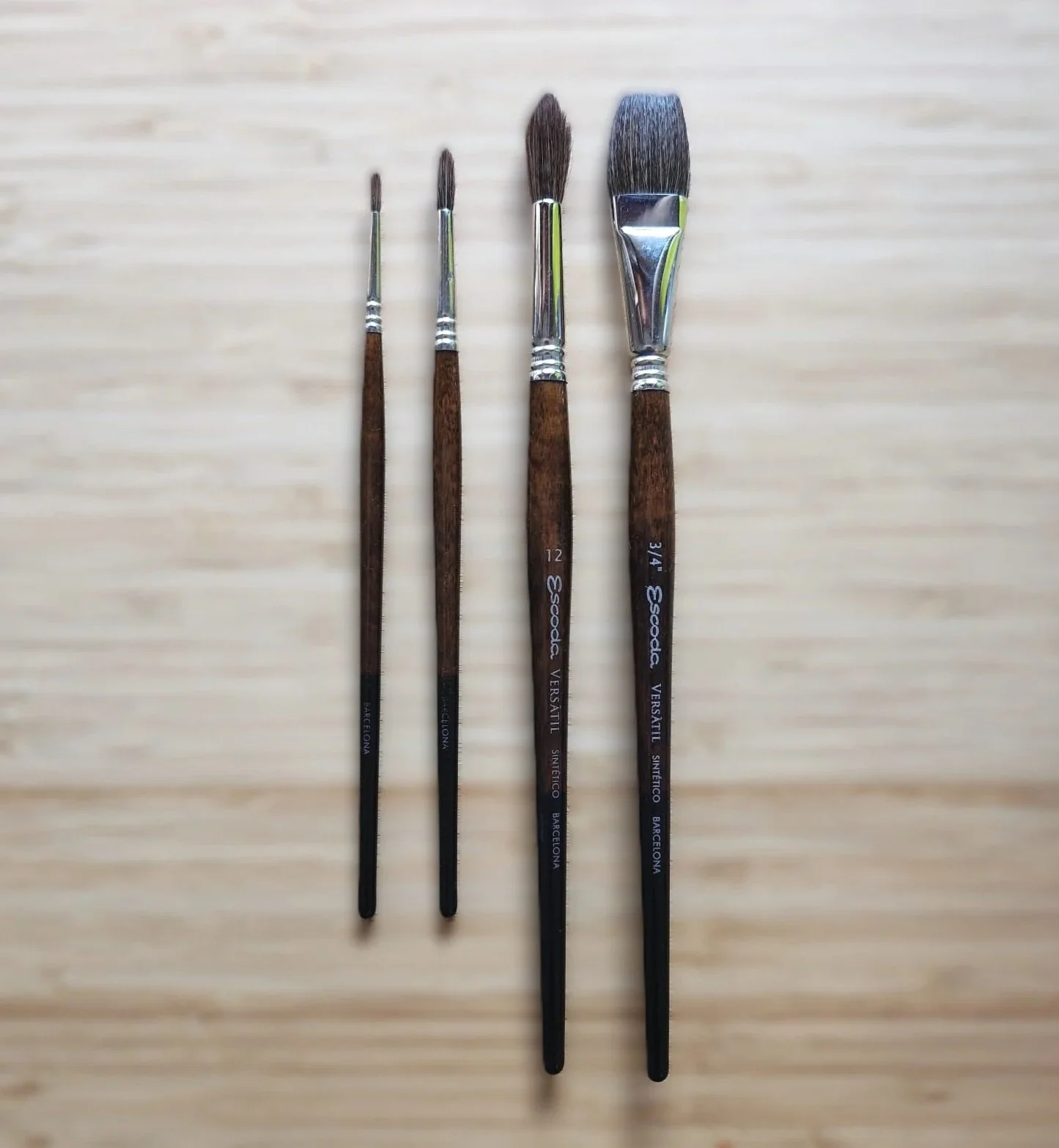
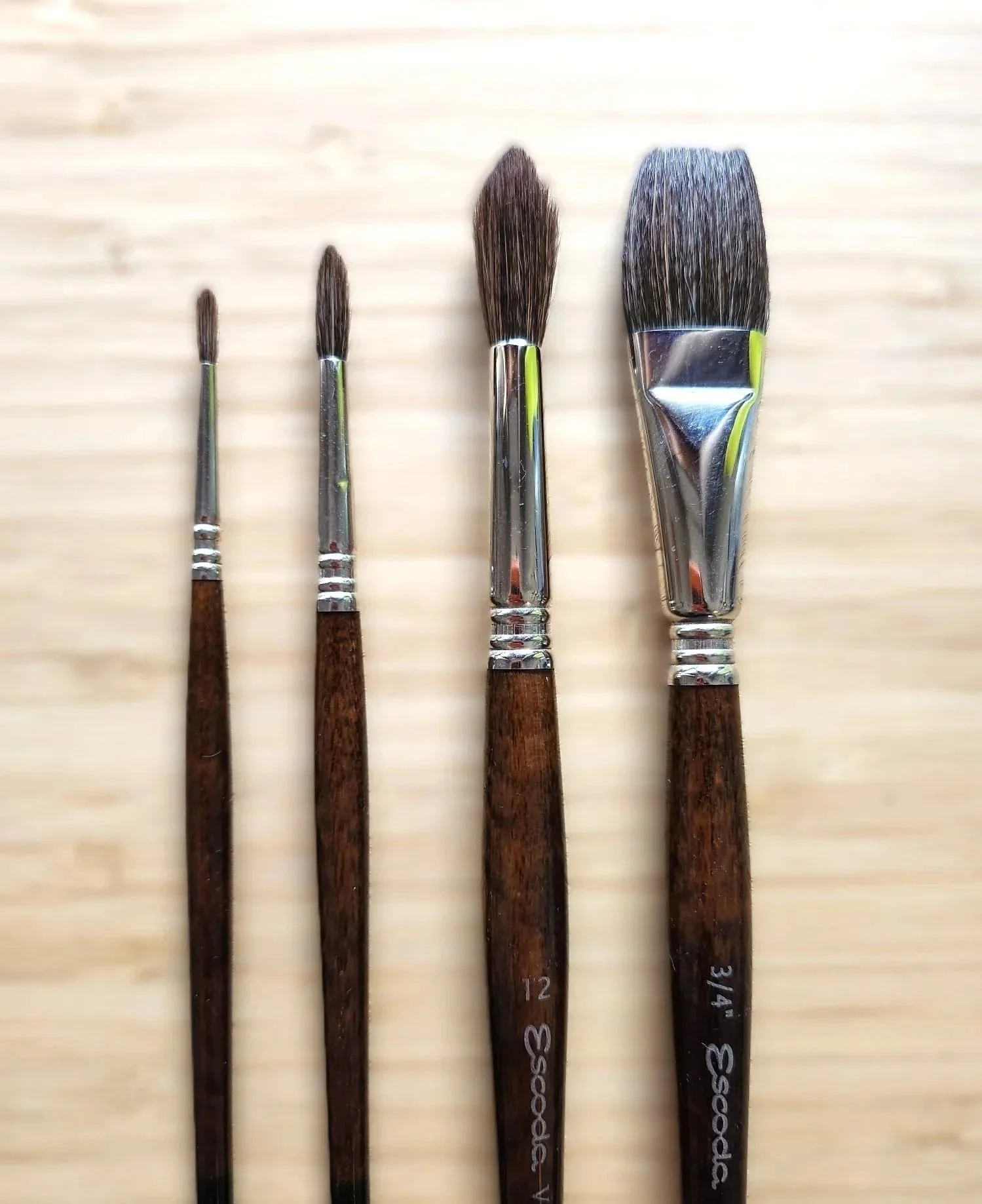
Honestly, when I watch tutorials, I sometimes feel that if I just had that exact brush, my work would be better. It's a trap that's easy to fall into. What always brings me back is a simple reminder I came across once: learn to use the materials you already have before chasing new ones. And that really helps.
Overall recommendation: a good 3-piece brush set will do more for you than a cheap 20-piece one.
Paper
If choosing paints and brushes felt hard… paper is a whole different story. And it's also the most important material.
Weight is the first thing to consider. 200gsm is thin and warps easily when wet, which can be frustrating when you're still learning. 300gsm is the standard for most watercolor work — it holds water well without too much drama. 600gsm is very thick and barely warps at all, but it's mostly used by professionals.
Texture is the next choice. Hot press is smooth and great for fine detail and clean lines. Cold press — also called NOT — is slightly textured and the most versatile option, suitable for most styles and what most artists recommend for beginners. Rough is heavily textured and best for loose, expressive work.
Then there's the biggest difference of all: wood pulp vs 100% cotton. Wood pulp paper is cheaper and more accessible, but it absorbs water differently and can be less forgiving. 100% cotton paper absorbs beautifully, blends more naturally and is simply a joy to paint on. This one choice alone can change how you experience watercolor entirely.
My experience
I started with Canson XL (cellulose paper), and once again found that paints didn't blend like in the tutorials and washes didn't look clean. Then I bought a block of Winsor & Newton 100% cotton paper — and immediately understood the difference. I was still using the W&N Cotman palette, but now the paint behaved like it did in the videos. Non-cotton paper simply behaves differently from 100% cotton, and that affects both your painting process and how you see your own work.
That said, not all non-cotton paper is bad, nor does all 100% cotton paper behave the same. Every artist has their own preferences, so you really have to try things yourself and experiment.
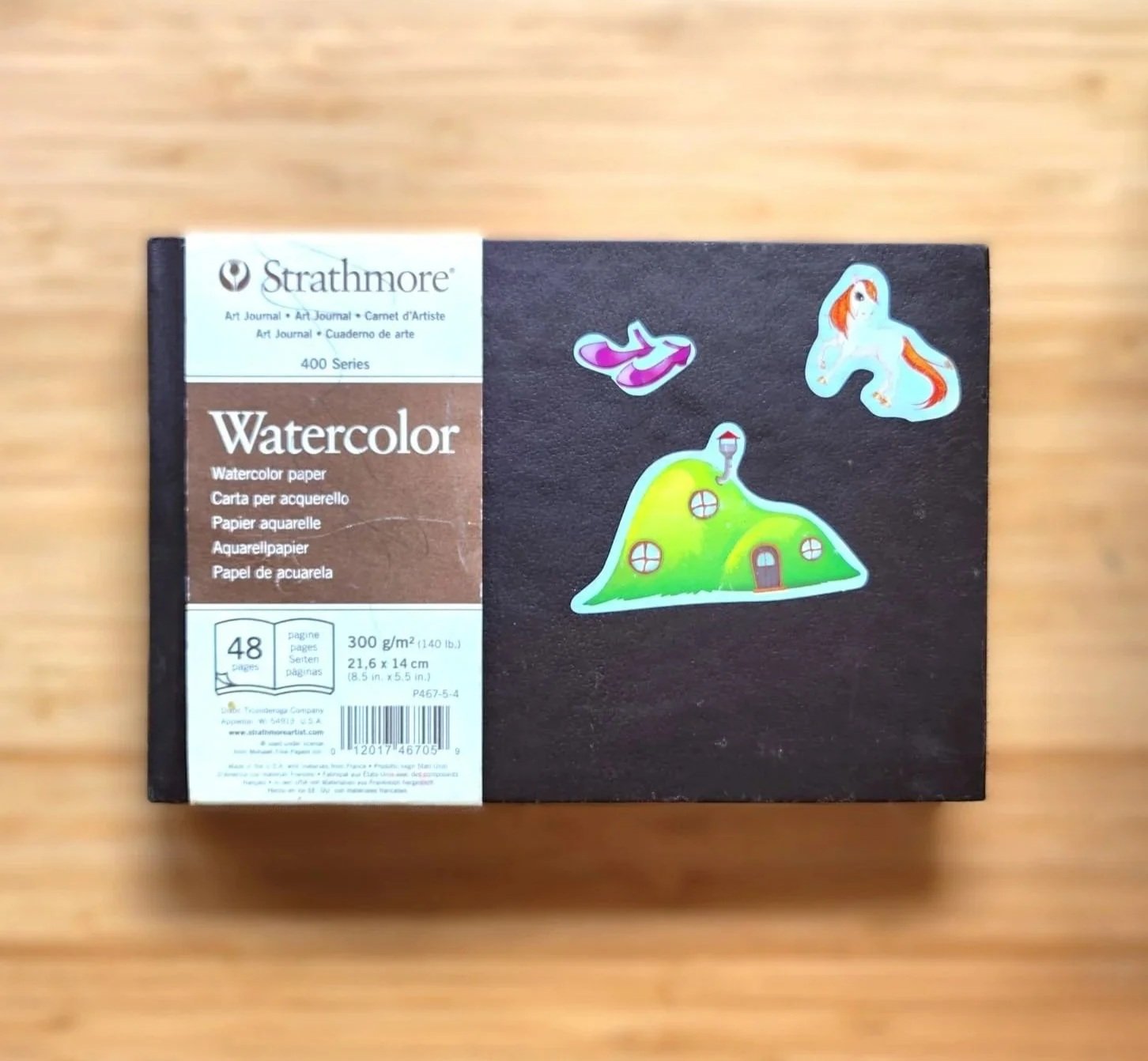
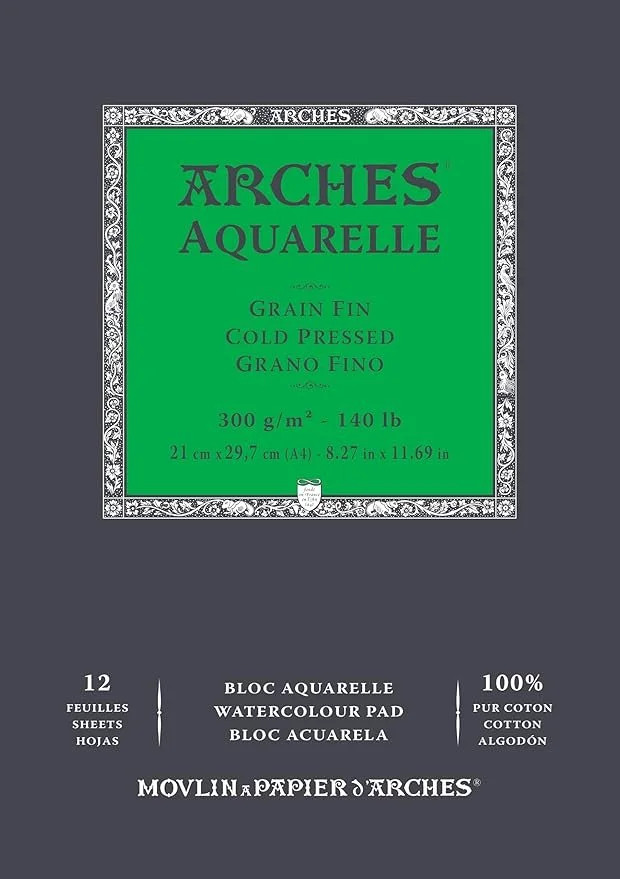
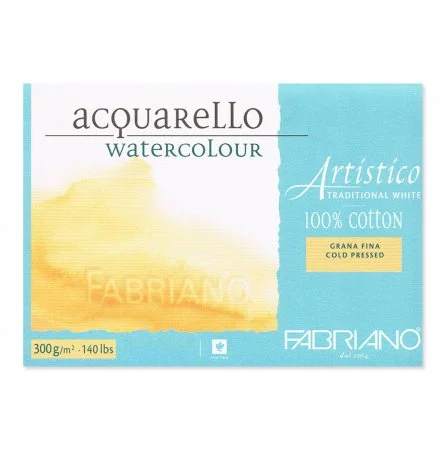
Since then, I've tried several papers, such as Strathmore 400 Series, Hahnemühle 20% cotton, Arches and Fabriano Artistico (my current favourite) — and the biggest tip I can share is this: upgrading to cotton paper will noticeably improve your results and is one of the biggest improvements you can make. But I really believe you need to try both non-cotton and 100% cotton paper to truly understand the difference and find what works for you, because they both have their purpose and place in art.
Water
I’ve used tap water, bottled water… and maybe even some tears 😅 And honestly — I haven’t noticed much difference.
Final thoughts 💛
Looking back, the most important thing I've learned is this: start simple, start where you can, and upgrade as you need — don't get caught in indecision.
When it comes to paints and brushes, good quality is worth the investment — they last longer and give you more room to experiment and grow. For paper, try both non-cotton and 100% cotton to really feel the difference for yourself.
But most importantly, give yourself time. Don't let the search for the "perfect" materials stop you from actually painting. Watercolor is not about having perfect tools — it's about learning how to use them.
And if you're still spiralling down the materials rabbit hole at 2am like I did — welcome. You're in good company. Now go paint something.
Materials I use (and where to find them)
If you're curious about the materials I use, I’ve listed them below in a simple way.
Some links below are affiliate links — if you buy through them I earn a small commission at no extra cost to you. 💛
I've also included a few Portuguese art stores I've used personally — no affiliation, just honest recommendations.
Paints
Winsor & Newton Cotman Pocket Plus (student grade)
Winsor & Newton Professional set (artist grade)
Schmincke Horadam Aquarell set (artist grade)
Van Gogh 12 pans set (student grade)
Brushes
Paper
Canson XL (wood pulp)
Strathmore 400 Series Art Book (wood pulp)
Winsor & Newton block (100% cotton)
Arches Aquarelle (100% cotton)
Fabriano Artistico (100% cotton) ⭐ current favourite
Art stores I've bought from:
Portugal
Spain
What's in your watercolor kit? I'd love to hear in the comments. 💛
💛 If you’d like to see more of my work:
✨ Explore my watercolor Portfolio
✨ Follow my journey on Instagram & Facebook
✨ Shop my prints & gifts on Redbubble
Comments are welcome! Please keep it kind and on topic. 💛
